
Fatigue Failure in Steel: Causes and Prevention
February 7, 2026 9:18 pm Leave your thoughtsFatigue failure in steel is a silent yet critical threat in many engineering and structural applications. Unlike sudden fractures caused by a single overload, fatigue failure arises from repeated cyclic stresses that are often well below the yield strength of the material. Over time, this gradual process can lead to the unexpected and catastrophic collapse of components, structures, or systems. Understanding the causes behind fatigue failure in steel, and implementing effective preventive measures, is vital across sectors such as construction, aerospace, transportation, and manufacturing.
The Nature of Fatigue Failure in Steel
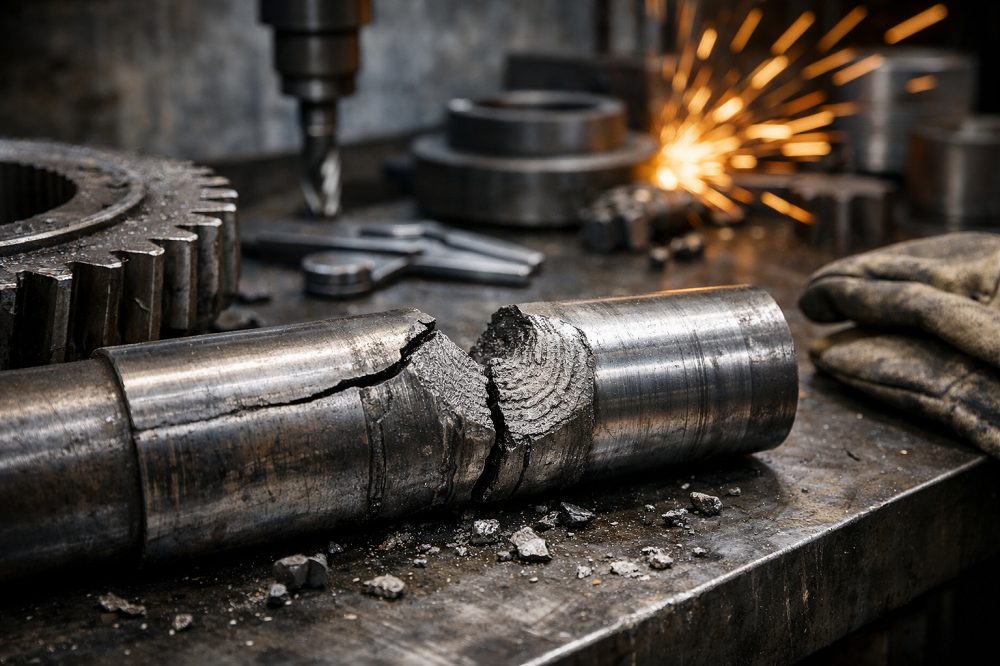
Fatigue failure in steel refers to the progressive and localized structural damage that occurs when a material is subjected to fluctuating or cyclic loads. This damage begins at a microscopic level, often at points of stress concentration such as notches, welds, surface imperfections, or sharp corners. Over time, micro-cracks develop and propagate with each stress cycle, growing gradually until the remaining cross-sectional area can no longer support the applied load. At this point, a sudden and complete failure can occur without any prior indication.
Steel, while known for its strength and durability, is not immune to metal fatigue. The unique challenge with fatigue failure lies in its unpredictability. Components that appear to be in perfect condition can fail suddenly after a specific number of load cycles, often far below their intended lifespan. The stress level, number of cycles, surface condition, and environment all play a role in determining when and how failure will occur.
Fatigue behavior in steel is often described by S-N curves, where “S” represents the stress amplitude and “N” the number of cycles to failure. These curves help engineers predict how long a steel component might last under various loading conditions. However, real-world conditions rarely mirror laboratory settings, which complicates the accurate prediction of fatigue life.
Primary Causes of Metal Fatigue in Steel Components
There are multiple factors that contribute to metal fatigue in steel. One of the most significant is the presence of stress concentrations. These are locations within a component where stress is higher than in the surrounding areas. Common causes include geometric discontinuities, such as holes, notches, threads, and abrupt changes in cross-section. Even small imperfections or surface scratches can serve as initiation points for fatigue cracks.
Material properties also influence fatigue behavior. Steel with impurities, inclusions, or inconsistent grain structure is more prone to fatigue. Manufacturing processes such as welding, machining, or casting can introduce residual stresses and surface roughness, further promoting crack initiation. Welded joints, in particular, are frequent sites of fatigue failure due to their complex geometry and thermal effects from the welding process.
Another critical factor is the magnitude and frequency of the applied load. High-stress ranges and a large number of load cycles significantly reduce fatigue life. This is especially true for components subject to dynamic loading, such as rotating machinery, bridge decks, or aircraft fuselages. Environmental conditions, including exposure to moisture, corrosive substances, or temperature fluctuations, can accelerate crack growth through a process known as corrosion fatigue.
Inadequate design, poor material selection, or insufficient maintenance further amplify the risk. If fatigue-prone areas are not properly identified and reinforced during the design phase, or if cracks are not detected and repaired during service, the chances of failure increase dramatically.
Identifying Early Signs and Detection Methods
Detecting early signs of fatigue failure in steel is essential to prevent accidents. However, because the process is slow and largely invisible in its initial stages, it poses a major challenge. Micro-cracks can develop well before any visual evidence appears. In fact, by the time a crack is large enough to be seen, significant internal damage may already exist.
Non-destructive testing (NDT) techniques are the most reliable way to detect fatigue cracks. These include ultrasonic testing, magnetic particle inspection, eddy current testing, and dye penetrant inspection. Each method offers varying degrees of sensitivity depending on the component geometry and location of the defect.
For instance, ultrasonic testing is particularly effective for internal cracks, while dye penetrant inspection is better suited for surface flaws. In critical applications such as aircraft or offshore structures, components may be routinely inspected using multiple NDT methods to ensure any early-stage cracks are caught in time.
Advanced monitoring systems now incorporate sensors and software that continuously track structural health. These systems measure strain, vibration, or acoustic emissions to identify changes that may indicate the presence of fatigue damage. Early detection not only enhances safety but also allows for targeted repairs, reducing downtime and extending the life of the asset.
Strategies for Preventing Fatigue Failure in Steel
Preventing fatigue failure in steel involves a multifaceted approach that begins with thoughtful design and extends through manufacturing, operation, and maintenance. The first line of defense is proper engineering design. By minimizing stress concentrations through smooth transitions, generous radii at corners, and avoiding abrupt changes in geometry, the likelihood of crack initiation can be significantly reduced. Where unavoidable, critical areas can be reinforced with fillets, gussets, or stress-relief features.
Material selection is equally important. High-quality steel with controlled microstructure and minimal impurities offers better fatigue resistance. Special surface treatments, such as shot peening or carburizing, can increase surface hardness and introduce beneficial compressive residual stresses, delaying crack initiation.
Manufacturing practices must aim to minimize defects and residual stresses. Proper welding procedures, stress-relief treatments, and quality control inspections all contribute to a more fatigue-resistant product. In many industries, welds are inspected for porosity, undercuts, and lack of fusion, as these flaws can become fatigue hot spots.
In-service, components must be monitored regularly, especially those exposed to fluctuating loads or harsh environments. Scheduled maintenance, timely replacement of worn parts, and retrofitting older structures with modern materials or designs can help manage fatigue risk. Corrosion protection measures, such as coatings, cathodic protection, and proper drainage, are essential when environmental factors are present.
Designing with redundancy, where critical loads are distributed across multiple paths, can also reduce the consequences of fatigue. If one component fails, others can carry the load, giving time for detection and repair.
Real-World Examples and Industry Applications
Fatigue failure in steel has been responsible for several high-profile disasters, emphasizing the importance of proactive management. One notable example is the 1940 collapse of the Tacoma Narrows Bridge. Although attributed primarily to aeroelastic flutter, the bridge’s design did not adequately consider dynamic loading effects that can lead to fatigue.
In the aviation industry, metal fatigue has been a persistent concern. The 1988 incident involving Aloha Airlines Flight 243 highlighted the risks of unnoticed fatigue cracks in fuselage joints, exacerbated by repeated pressurization cycles. Since then, aircraft maintenance protocols have evolved with rigorous fatigue analysis and inspection schedules.
Railway systems also experience fatigue issues, particularly in tracks and wheel assemblies that undergo constant cyclic loads. Modern trains incorporate advanced materials and design features to combat fatigue, supported by regular inspection routines.
Automotive manufacturers must balance weight reduction with strength, making fatigue analysis a key part of the design process. Components like suspension arms, drive shafts, and engine mounts are engineered for high-cycle durability. Steel remains a preferred material, but its fatigue behavior must be fully understood and managed.
In offshore structures, such as oil rigs and wind turbines, metal fatigue steel failures can lead to environmental and financial consequences. These installations are often exposed to continuous wave loading, which demands precise fatigue life calculations and protective design measures.
Conclusion
Fatigue failure in steel is a complex yet critical phenomenon that engineers and designers must consider to ensure the safety, reliability, and longevity of metal structures and components. Although the initiation and progression of fatigue cracks can be subtle, the end result is often catastrophic. By understanding the underlying causes, utilizing effective detection techniques, and applying strategic design and maintenance practices, the risks associated with metal fatigue in steel can be significantly reduced.
In an era where infrastructure and machinery are pushed to their limits, the importance of fatigue management cannot be overstated. Whether in bridges, airplanes, vehicles, or industrial equipment, steel components must be designed and maintained with fatigue in mind. Only through vigilance and innovation can we prevent failures and protect both human lives and investments.
Need a Steel Construction Company in Terre Haute, IN?
Benchmark Fabricated Steel is a premium service provider for all your metal and steel needs since 1971. We offer an array of services and products for commercial, business, and corporation work. Our fully trained team is available for project design, erect drawings, site construction, product procurement and delivery, engineering and consulting, and much more. Benchmark Fabricated Steel is fully accredited by the AISC and the Canadian welding association allowing for the highest quality product to be produced. Our business is also recognized by the Chamber of Commerce and is a fully certified fabricator. All of our products are manufactured by the highest quality of equipment, with an expert and knowledgeable staff. Contact us today to learn more about what we can do for you!
Categorised in: Steel
This post was written by admin